Why Your Team Supports the Strategy but Still Isn’t Aligned

The Hidden Barriers to Strategy Execution • Part 3
Everyone agrees on the strategy. So why is the work still pulling in different directions?
Most leaders have experienced this moment. You invest time clarifying strategy. The plan makes sense. The team supports it. People want it to succeed. And yet, once the work begins, execution feels scattered. Effort is high, but progress is slower and harder than it should be. Teams are busy, but momentum is elusive. When this happens, the issue usually isn’t motivation. It’s alignment.

Why strategy breaks down as it moves through the organization
At the top of an organization, strategy often feels clear. Leaders understand the priorities, the tradeoffs, and the outcomes they are aiming for.
But as that strategy moves through layers of the organization, interpretation starts to creep in. Teams translate strategy through the lens of their own pressures, responsibilities, and incentives.
Departments tend to prioritize what feels most urgent to them. Individuals optimize for what helps their team succeed locally.
None of this is malicious. People are trying to do good work. But when strategy is interpreted rather than coordinated, teams begin pulling in different directions.
The result is fragmentation. Work continues, but it no longer adds up to shared progress.

What misalignment looks like in day-to-day execution
When alignment is weak, teams stay busy but lose coordination.
Ask different people what success looks like, and you’ll get different answers. Strategic priorities compete instead of reinforcing one another. Collaboration happens reactively, often to fix problems, rather than intentionally to move work forward together.
Leaders feel this strain quickly. Time that could be spent building momentum gets redirected toward reclarifying focus. Progress depends on frequent course correction instead of steady forward movement.
Over time, execution slows, not because people don’t care, but because their efforts are no longer synchronized.

How leaders build alignment instead of assuming it
Alignment doesn’t happen automatically once a strategy is approved. It has to be built.
That starts with shared priorities across teams, not just agreement at the leadership level. Strategy must be translated clearly into what it means for each role and function, so people understand how their work contributes to shared outcomes.
Alignment also requires regular rhythms that reinforce focus. Leaders need visibility into how work connects across the organization, not just within individual teams.
This allows coordination to replace interpretation.
benefits of team alignment
Alignment is less about agreement and more about coordination.
When teams execute together, decisions reinforce each other. Collaboration improves naturally. Progress compounds.
Without alignment, leaders spend their time pulling people back into focus, trying to get everyone moving in the same direction at the same time.
Teams don’t fail to execute because they don’t care. They fail when alignment is weak.
Agreement creates support. Alignment creates movement.

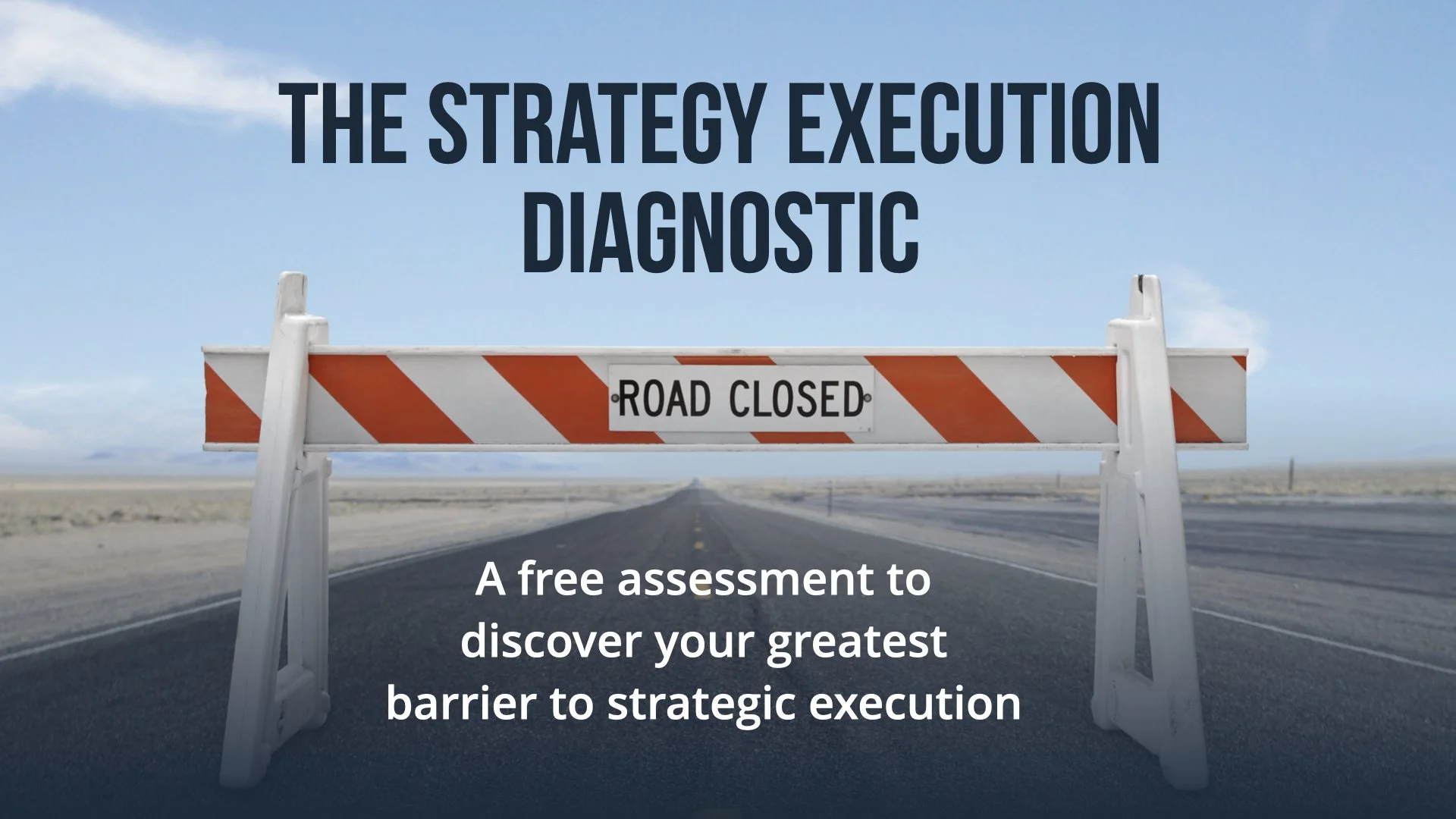
Discover your biggest strategic barrier
If your strategy makes sense but isn’t translating into real momentum, this diagnostic can help!
The Strategy Execution Diagnostic is a short assessment designed to identify the specific barrier slowing execution in your organization.
It gives you clarity on what’s actually getting in the way — so you know where to focus first instead of trying to fix everything at once.