Why Explaining the Strategy Doesn’t Make It Happen
The Hidden Barriers to Strategy Execution • Part 2
Everyone agrees on the strategy. So why does nothing change?
You’ve explained the strategy. People nodded. The slide deck was clear.
But…
Monday arrives, and the work looks exactly the same.
Nothing’s changed to move that strategy forward.

When clear strategy still doesn’t change behavior
People agree with the direction and may even feel energized by it.
But agreement does not automatically translate into execution.
The problem usually isn’t resistance or apathy. It isn’t that people don’t understand.
The real issue is that communication is being asked to do a job it cannot do on its own.
Explaining a strategy helps people understand it, but understanding alone rarely changes how work actually gets done.

Why explanation alone doesn’t lead to execution
It can be easy for leaders fall into a well-intentioned trap.
When execution stalls, they explain the strategy again. They add more context. They communicate more frequently.
But communication alone does not change behavior. Understanding is not the same as execution.
People can support the strategy and still default to familiar habits once the day gets busy.
When the way work happens stays the same, behavior usually stays the same too, no matter how clear the explanation is.
It’s common for strategy to live primarily in meetings, presentations, and leadership updates. Progress depends on reminders. Leaders keep the strategy alive through words, and when attention shifts to the next urgent issue, execution quietly fades.
When strategy exists mostly in conversation, it never becomes self-sustaining.

What execution actually requires
For strategy to move into real work, it has to be reinforced by the environment people work in every day.
That includes workflows that support the strategy, clear ownership and decision rights, expectations that make the right behavior the easy behavior, and rhythms that keep the strategy present without constant reminders.
When these elements are in place, leaders don’t have to push nearly as hard.
Execution no longer depends on how often the strategy is explained. It becomes embedded in how work is done.
Why environment matters more than persuasion
People generally follow the path of least resistance.
The environment is like a path. Over time, behaviors that are reinforced by systems, processes, and expectations start to feel natural — you end up with a natural path that’s created.
When the environment supports the strategy, execution flows more easily.
When it doesn’t, leaders end up carrying the weight of the strategy themselves, constantly communicating and reminding, which quickly becomes exhausting.
Communication important. It helps people understand the strategy. Reinforcement helps them live it out.
If execution depends on repeated explanation, it isn’t built to last. That isn’t a leadership failure. It’s a design issue!

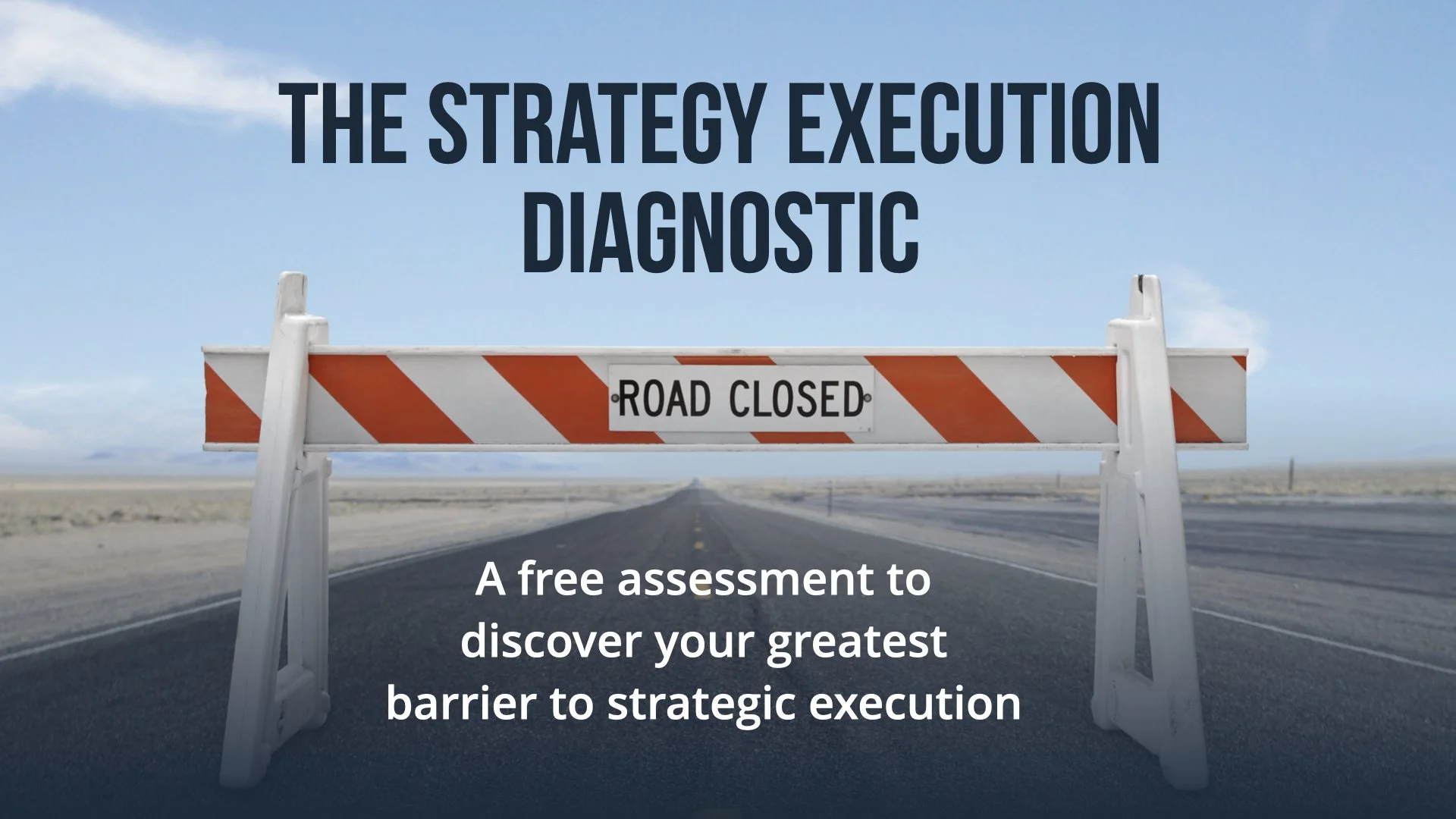
Discover your biggest strategic barrier
If your strategy makes sense but isn’t translating into real momentum, this diagnostic can help!
The Strategy Execution Diagnostic is a short assessment designed to identify the specific barrier slowing execution in your organization.
It gives you clarity on what’s actually getting in the way — so you know where to focus first instead of trying to fix everything at once.